Website and brandEducation
Designing a future-ready digital campus that builds trust, clarity, and conversions.

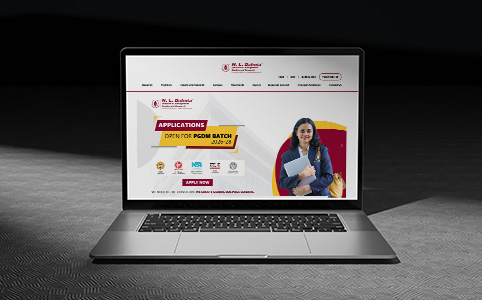
The story
What we did and what moved
Overview
N.L. Dalmia Institute needed a complete digital transformation to reflect academic credibility while supporting student acquisition and long-term growth objectives. The mandate focused on building a modern, structured, and conversion-oriented website that could effectively serve diverse stakeholders including prospective students, parents, faculty members, and corporate partners.
The project covered everything from UX strategy and information architecture to visual design and development. The platform needed to serve multiple audiences including prospective students, parents, faculty, and corporate partners. It had to strike the right balance between institutional credibility and approachability, while staying flexible enough to grow with future academic programs and content needs.
The Challenge
The core challenge was making complex academic information simple and accessible without losing depth or credibility. The platform needed to meet the expectations of a digitally native student audience while maintaining institutional authority.
Process Description
We don’t just hand over strategy documents, we roll up our sleeves and get in the trenches with you. Our process starts by listening deeply, challenging assumptions, and spotting what’s not obvious. Whether it's about fixing what's broken or building from scratch, we co-create a roadmap grounded in reality, not theory.
Strategy
- Strategy Workshops
- Idea Validation
- Market Research
- Product Roadmap
- Research
Design
- Information Architecture
- Wireframing
- Visual Design
- Prototyping
Testing & Deploy
- A/B Testing
- UI Testing
- Deployment
Conclusion
The redesigned website transformed N.L. Dalmia Institute’s digital presence into a high-performing platform that aligns with both brand identity and business goals.
The new site delivers:
A smooth, consistent experience across all devices.
Clear academic pathways that guide users from exploration to inquiry.
A stronger visual identity that elevates how the institution is perceived.
A scalable framework ready to support new programs, content, and marketing efforts.
By combining thoughtful UX strategy with solid development execution, the project created a digital foundation that informs, inspires, and converts.
A website that earns trust
AI-ready website builds that rank, load fast and turn visits into sales conversations.